Strengthening Systems for North Carolina Children
Strengthening Systems for North Carolina Children (SYNC) is a no-cost training opportunity for new or existing community coalitions in North Carolina who are interested in using systems thinking for cross-system, coordinated, long-term ACEs prevention work. Communities in North Carolina disproportionately affected by ACEs receive guidance and technical assistance from subject matter experts in using systems thinking to identify ways to 1) strengthen systems that support ACEs-related protective factors and 2) disrupt systems that contribute to ACEs-related risk factors.
Through interactive workshops, community teams of 10 to 25 will learn how to use a tool called causal loop diagramming (CLD) to create a tailored diagram of the systems that influence ACEs-related shared risk and protective factors (SRPFs) in their community. They will use the diagram to identify key points of high leverage that the community can target to mitigate ACEs. After completion of these workshops, teams will receive one year of ongoing technical assistance to implement and refine the CLD.
Community Team Experiences
Franklin County, NC
Click here to read the testimony of the team leader of Franklin County’s SYNC team. Franklin County participated in SYNC in 2023.
Surry County, NC
Click here to read the testimony of the team leader of Surry County’s SYNC team. Surry County was SYNC’s pilot community and participated in the project in 2022. For other stories from the pilot community, check out the following articles from The Mount Airy News.
- SYNC Seeks to Reduce Childhood Trauma (June 3rd, 2022)
- Group Seeking to Change Outcomes for Kids (July 11th, 2022)
Newsletters
SYNC began a quarterly newsletter in 2024. View our past newsletters here:
Collaborative Learning Institute
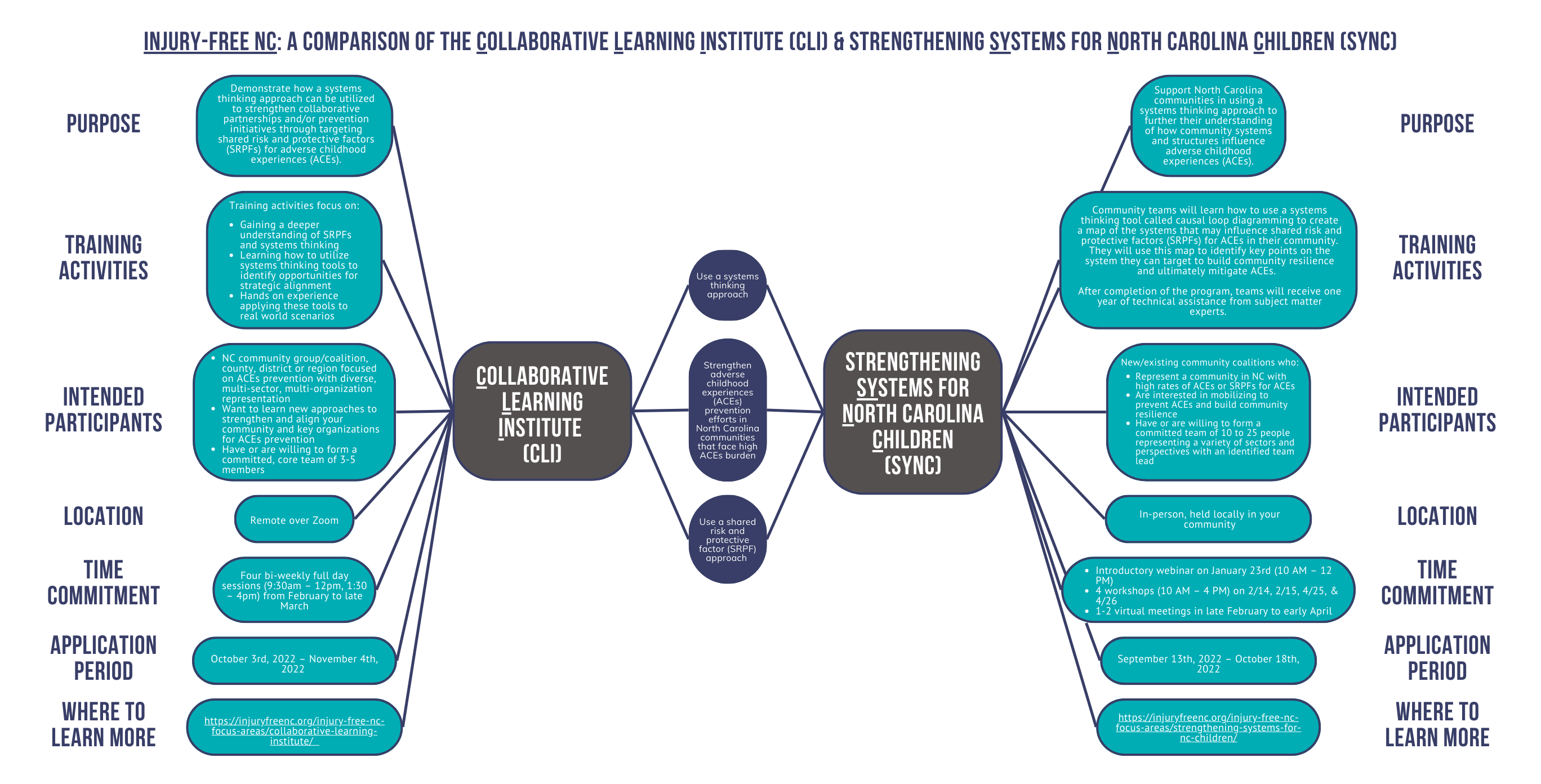
If you are interested in using a systems thinking approach for ACEs prevention efforts but, for any reason, are not able to apply to SYNC, IFNC offers another training program, the Collaborative Learning Institute. To learn more, visit the CLI webpage here, or click on the infographic below to view a comparison of the CLI and SYNC.